


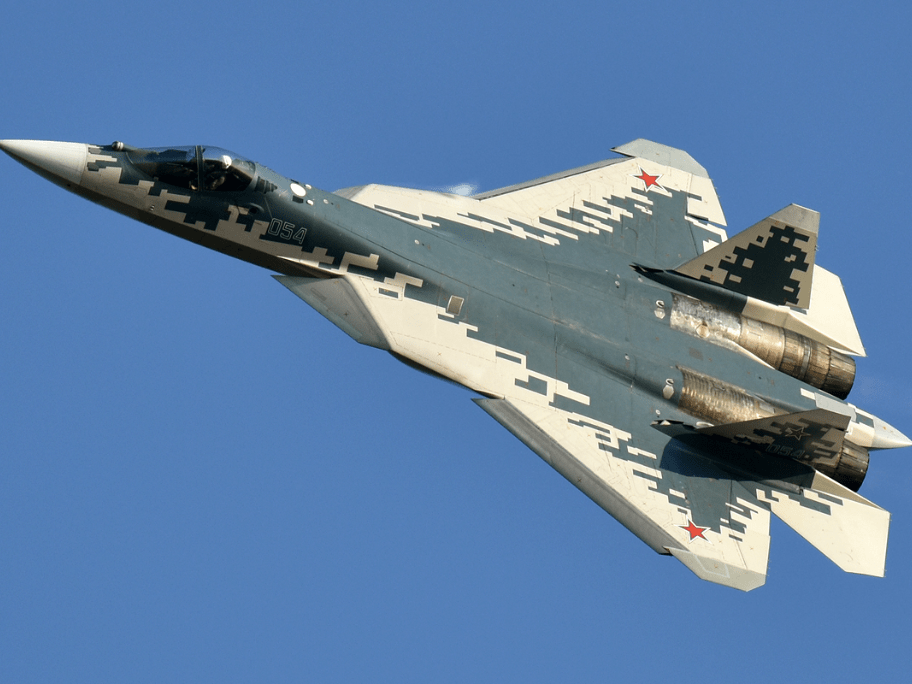
Analyse de la puissance aérienne russe au XXIe siècle
Résumé
La Russie a l’intention d’utiliser sa puissance aérienne pour effectuer une projection de puissance offensive dans les pays voisins et pour se défendre contre l’empiétement occidental. Ce concept de puissance aérienne est conforme aux objectifs nationaux de la Russie, qui sont de regagner une reconnaissance mondiale en tant que grande puissance, de reconquérir et d’assurer l’influence de la Russie sur les anciennes nations contrôlées par les Soviétiques, et de se présenter comme un intermédiaire régional afin de regagner en crédibilité afin de pouvoir réécrire l’ordre mondial libéral et contrer l’influence américaine. De plus, la Russie est en train d’acquérir des avions de combat de cinquième génération et des véhicules aériens sans pilote (UAV) avancés pour soutenir son complexe militaro-industriel et suivre le rythme technologique de ses concurrents occidentaux. Malgré l’acquisition de cette technologie de pointe, les tendances des opérations de combat et des exercices d’entraînement suggèrent que la Russie utilisera ces plates-formes avancées dans les ensembles de missions traditionnels.
A propos de l'auteur
John Gerlach est chercheur associé en sécurité internationale et défense à l'Université de Lyon III, Faculté de droit Jean Moulin, Lyon France. Il est diplômé de l'Université de Syracuse (2006), avec un baccalauréat ès sciences en génie aérospatial et une maîtrise en sciences sociales (2014). Après avoir obtenu son diplôme universitaire, il a été commissionné dans l'US Air Force et a reçu ses ailes de pilote en 2008. Il a effectué plusieurs déploiements dans le cadre d'opérations d'urgence à l'étranger en pilotant l'avion C-17 Globemaster III. Avant de s'installer en France dans le cadre du programme Olmsted Scholar, il était instructeur à la United States Air Force Weapons School. Récemment, John a obtenu son Master en Sécurité Internationale et Défense (2019) de l'Université de Lyon III, Faculté de Droit Jean Moulin.

Concepts opérationnels

The Urban Littoral: A Framework to Understand Command and Control in Complex and Unpredictable Environments
The trends of rapid population growth, urbanization, littoralization, and hyper-connectivity from a communications and information point of view portend a new age of warfare centered around the urban-littoral operating environment. With this understanding, the study of this environment, and more specifically the conduct of war within it, seems increasingly important for military theorists, practitioners, and leaders. The complexity of this truly joint and all-domain milieu, which is highly interconnected and underscored by a multitude of characteristics to include dense civil populations, complex man-made terrain, communications and information hyper-connectivity, coastal geography and terrain, rapidly changing weather, various meteorological phenomena, and the effects of hydrography and oceanography, presents many challenges with respect to the execution of command and control (C2). This study seeks consequently to determine the ideal conception of C2 in the urban littoral, which should serve as a framework for understanding this function of warfare across the spectrum of complex and unpredictable multi-domain environments.

The Evolution of Command and Control (C2) in Multi-Domain Operations
Au cours des deux dernières décennies, plusieurs Etats en compétition avec les Etats-Unis ont capitalisé sur les progrès de la technologie et sont désormais capables de contester la domination opérationnelle américaine dans tous les domaines. Afin de contrer cette menace, les Etats-Unis et leurs alliés ont adopté une doctrine d’« opérations multidomaines ». La complexité de cette nouvelle stratégie exige un progrès dans les technologies de communication, une évolution et une adaptation de l’intelligence artificielle, ainsi qu’une refonte des structures et processus de commandements actuels.
𝐃𝐞́𝐜𝐞𝐦𝐛𝐫𝐞 𝟐𝟎𝟏𝟗
À lire également
Crossing the Thresholds, Colliding with the Vaults: Navigating the New Atomic Chambers of the Third Nuclear Age
From Kahn to Hersman, the notion of a nuclear threshold, linked to the concept of escalation dominance, has a long intellectual history in nuclear strategy. Nevertheless, under the conditions prevailing in the Third Nuclear Age, the ambiguity inherent in this metaphor appears increasingly problematic for the effective management of nuclear crises. The first obvious reason is the term’s intrinsic polysemy: a threshold may refer to a level of danger or pressure in a crisis, a trigger point for a particular action, a psychological tipping point, as well as a specific degree of destruction. This polysemy is problematic in itself, but this article suggests that the key problem lies in what derives from this lexical fragmentation: the inability to politically model what a threshold actually represents within a crisis unfolding under nuclear conditions.

L’évolution de la stratégie aérienne polonaise à l’aune des conflits en Ukraine (2014-2024)
Alors que des missiles frôlent son territoire et que la guerre s’installe durablement à ses frontières orientales, la Pologne intensifie une transformation militaire engagée dès 2013. Héritière d’une histoire marquée par les partages, les annexions et l’occupation par les puissances voisines, Varsovie nourrit une défiance accrue à l’égard de la Russie. L’invasion russe de l’Ukraine a renforcé ses craintes. De cette guerre, elle a tiré des enseignements doctrinaux : l’impasse aérienne entre Moscou et Kiev l’a contrainte à repenser en profondeur sa composante aérienne. Cette note analyse l’adéquation entre les ambitions affichées de Varsovie et les moyens effectivement déployés, révélant, derrière des investissements records et une modernisation accélérée, des fragilités structurelles susceptibles de compromettre les capacités de défense d’un pays désormais au cœur de la sécurité européenne.
The Urban Littoral: A Framework to Understand Command and Control in Complex and Unpredictable Environments
The trends of rapid population growth, urbanization, littoralization, and hyper-connectivity from a communications and information point of view portend a new age of warfare centered around the urban-littoral operating environment. With this understanding, the study of this environment, and more specifically the conduct of war within it, seems increasingly important for military theorists, practitioners, and leaders. The complexity of this truly joint and all-domain milieu, which is highly interconnected and underscored by a multitude of characteristics to include dense civil populations, complex man-made terrain, communications and information hyper-connectivity, coastal geography and terrain, rapidly changing weather, various meteorological phenomena, and the effects of hydrography and oceanography, presents many challenges with respect to the execution of command and control (C2). This study seeks consequently to determine the ideal conception of C2 in the urban littoral, which should serve as a framework for understanding this function of warfare across the spectrum of complex and unpredictable multi-domain environments.