


Crossing the Thresholds, Colliding with the Vaults: Navigating the New Atomic Chambers of the Third Nuclear Age
From Kahn to Hersman, the notion of a nuclear threshold, linked to the concept of escalation dominance, has a long intellectual history in nuclear strategy. Nevertheless, under the conditions prevailing in the Third Nuclear Age, the ambiguity inherent in this metaphor appears increasingly problematic for the effective management of nuclear crises. The first obvious reason is the term’s intrinsic polysemy: a threshold may refer to a level of danger or pressure in a crisis, a trigger point for a particular action, a psychological tipping point, as well as a specific degree of destruction. This polysemy is problematic in itself, but this article suggests that the key problem lies in what derives from this lexical fragmentation: the inability to politically model what a threshold actually represents within a crisis unfolding under nuclear conditions. The analytical impasse reached when the sole notion of a “threshold” is expected to encompass the entire challenge of nuclear strategy is compounded by the dominant tendency to interpret that threshold through an exclusively vertical logic – that of an escalation ladder.
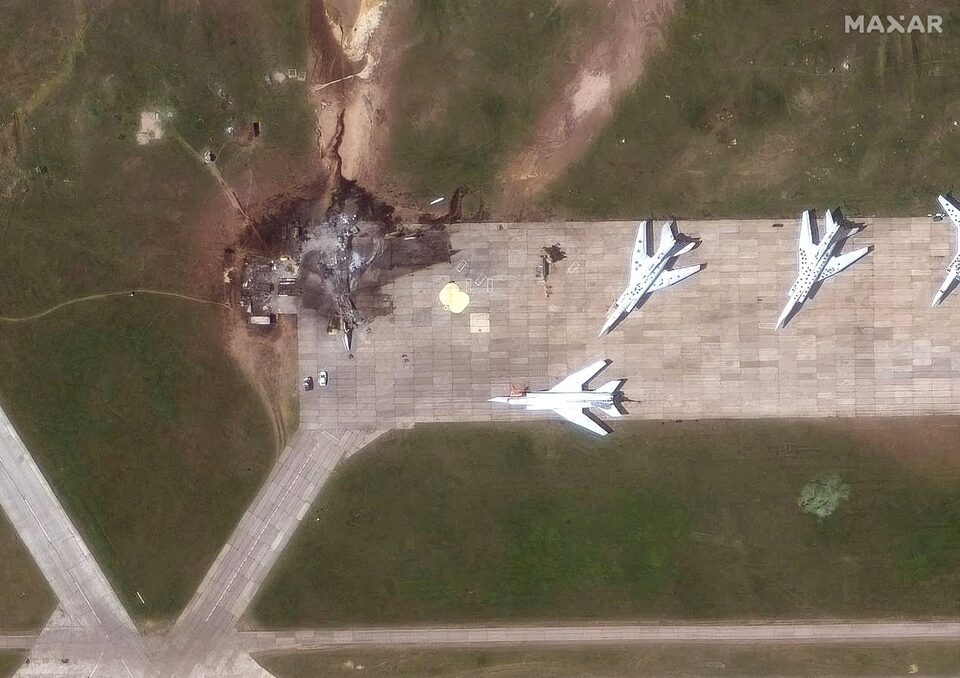
To propose an alternative dynamic model for interpreting contemporary deterrence limits, this article distinguishes, defines and then brings together three foundational and complementary concepts: deterrent thresholds, atomic chambers, and nuclear vaults. It then clarifies, through a conceptual graphical model relating those different notions, how the atomic chambers follow one another, and what it means to pass through them as successive deterrence thresholds intensify the pressure on political leaders. Four case studies of nuclear crises, spanning both historical and contemporary episodes, are examined through the lens of this model. Finally, the article draws conclusions from the unprecedented atomic chamber that emerged following Ukraine’s “Spiderweb” operation in June 2025, studying its troubling effects on new extended deterrence architecture, particularly in Europe.
A propos de l'auteur
Olivier Zajec est Professeur des universités en science politique à l’université Jean Moulin – Lyon III, où il a fondé et dirige depuis 2018 l’Institut d’études de stratégie et de défense (IESD) ainsi que le Master Relations internationales – Sécurité internationale et défense (SID). Auteur de nombreux articles scientifiques, ses thématiques de recherche portent sur la théorie réaliste des relations internationales, les approches socio-spatiales en science politique, et les études stratégiques et de défense. Il est entre autres l’auteur des Limites de la guerre. L'approche réaliste des conflits armés au XXIe siècle (Mare et Martin, 2024).